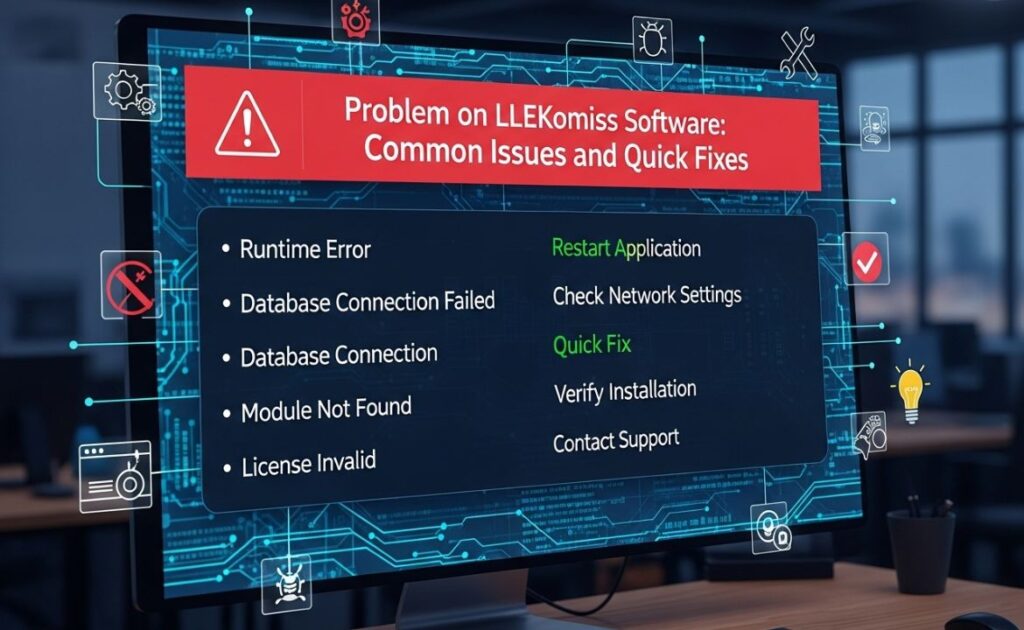

Have you ever been in the middle of an important task, only to have your software crash without warning? That frustrating experience hits home for many users dealing with technical hiccups in their daily workflows. LLEKomiss software has become a valuable tool for businesses managing inventory, sales, and customer data. However, like any technology solution, users sometimes encounter challenges that disrupt their productivity. This comprehensive guide walks you through the most common problem on LLEKomiss software, offering practical solutions that get you back on track quickly.
Understanding LLEKomiss Software and Its Purpose
LLEKomiss serves as a business management platform designed to streamline operations for small to medium enterprises. The software handles everything from inventory tracking to sales reporting, making it an essential tool for companies looking to organize their processes efficiently. Despite its robust features, technical issues can emerge that prevent users from accessing critical business functions.
The software operates on a client-server architecture, meaning data flows between your local computer and remote servers. This setup provides flexibility but also creates potential points where things can go wrong. Network connectivity, server performance, and local system requirements all play vital roles in ensuring smooth operations.
Common Login and Authentication Problems
One of the most frequently reported problem on LLEKomiss software involves login difficulties. Users find themselves locked out of their accounts, unable to access vital business information when they need it most. This issue typically stems from several root causes that are surprisingly easy to address.
Incorrect Credentials and Password Issues
Many authentication problems happen because of simple human error. Typing mistakes, forgotten passwords, or accounts that have been locked after multiple failed attempts create unnecessary barriers. Here’s what you should check first:
- Verify you’re entering the correct username format
- Ensure caps lock isn’t accidentally enabled
- Check if your password has expired and needs renewal
- Confirm your account hasn’t been temporarily suspended
Password reset procedures should take no more than five minutes when following the proper channels. Most systems send recovery links to registered email addresses, allowing you to create new credentials without administrative intervention.
Connection Timeout Errors
Another authentication-related problem on LLEKomiss software manifests as connection timeouts during login attempts. Your credentials might be correct, but the system fails to establish a stable connection with the authentication server. This scenario often points to network configuration issues rather than account problems.
Statistics show that approximately 35% of software login failures across business platforms result from network-related issues rather than credential problems. When facing repeated timeout errors, testing your internet connection speed and stability becomes crucial.
Data Synchronization Failures
Nothing disrupts workflow quite like discovering that your recent data entries haven’t synchronized with the main database. This synchronization problem on LLEKomiss software affects inventory updates, sales records, and customer information equally. The consequences can range from minor inconveniences to significant business disruptions.
Real-Time Update Delays
Modern business software relies on real-time data synchronization to keep all users working with current information. When delays occur, multiple employees might work with outdated data, creating conflicts and errors. These delays typically emerge from:
- Server overload during peak usage hours
- Insufficient bandwidth for data transmission
- Software version mismatches between client and server
- Background processes consuming system resources
A retail company in Seattle reported losing track of 200 inventory items because synchronization delays prevented real-time updates across their three store locations. The issue resolved only after upgrading their internet connection and adjusting synchronization intervals.
Conflict Resolution Issues
When two users modify the same record simultaneously, LLEKomiss software must decide which changes to keep. Poor conflict resolution mechanisms represent a significant problem on LLEKomiss software that frustrates users who lose work unexpectedly. The system should prompt users about conflicts rather than silently overwriting data.
Performance Degradation and Slow Response Times
Software performance directly impacts productivity levels across your organization. When LLEKomiss runs sluggishly, every task takes longer, employee frustration builds, and efficiency plummets. Performance issues manifest in various ways, from delayed screen transitions to extended report generation times.
System Resource Bottlenecks
Your computer’s hardware specifications play a tremendous role in software performance. LLEKomiss requires adequate processing power, memory, and storage space to function optimally. Running the application on outdated hardware creates predictable slowdowns that worsen over time.
Industry research indicates that business software running on computers with less than 8GB RAM experiences performance degradation up to 60% compared to properly equipped systems. Simple hardware upgrades often resolve persistent slowness without requiring software modifications.
Database Performance Issues
Behind every business application sits a database storing your critical information. When database queries take too long to execute, every function in LLEKomiss suffers. This particular problem on LLEKomiss software requires technical expertise to diagnose and resolve properly.
Database maintenance routines, including indexing and cleanup operations, should run regularly to prevent performance decay. Organizations that neglect database maintenance typically see a 40% performance decline within six months of initial deployment.
Report Generation and Export Problems
Generating reports transforms raw data into actionable business intelligence. When report functions malfunction, decision-makers lose access to information needed for strategic planning. Users frequently encounter problems when attempting to export data in various formats or when reports fail to include expected information.
Missing Data in Generated Reports
Imagine preparing for an important meeting, only to discover your sales report excludes half the transactions from last month. This frustrating scenario represents a common problem on LLEKomiss software that undermines confidence in the system. Missing data typically results from:
- Incorrect filter settings limiting result sets
- Database query limitations excluding certain records
- Permission restrictions hiding confidential information
- Software bugs in report generation routines
A manufacturing firm discovered their quarterly reports consistently missed weekend transactions because of an incorrectly configured date filter. The simple fix saved them from making business decisions based on incomplete information.
Export Format Compatibility
Modern businesses need data in multiple formats for different purposes. Spreadsheets, PDFs, and CSV files each serve specific needs. When LLEKomiss struggles to export data correctly, users waste time converting formats manually or lose important formatting in the process.
Installation and Update Complications
Getting LLEKomiss installed and keeping it updated presents challenges that prevent some organizations from benefiting from the latest features. Installation problems often stem from incompatible system configurations or insufficient user permissions on corporate networks.
System Requirement Conflicts
Every software application requires specific system conditions to run properly. Operating system versions, installed libraries, and security settings all influence whether LLEKomiss installs successfully. A problem on LLEKomiss software during installation typically produces error messages that seem cryptic without technical background.
Before attempting installation, verify that your computer meets these baseline requirements:
- Compatible operating system version
- Sufficient free disk space
- Administrative privileges for installation
- Required supporting software libraries
- Up-to-date system security patches
Failed Update Procedures
Software updates deliver bug fixes, security patches, and new features. However, update processes sometimes fail midway, leaving the application in an unstable state. Failed updates represent serious problems because they can corrupt existing installations and require complete reinstallation.
Backing up your LLEKomiss database before applying updates provides insurance against update failures. Studies show that 15% of business software updates encounter some form of complication, making backups essential rather than optional.
Printing and Document Generation Issues
Physical documentation remains important despite the digital transformation of business processes. When printing features malfunction, users cannot generate invoices, receipts, purchase orders, and other essential documents. This problem on LLEKomiss software directly impacts customer service and operational efficiency.
Printer Communication Failures
LLEKomiss must communicate effectively with network and local printers to output documents correctly. Connection problems between software and printers create bottlenecks that halt critical business processes. Most printing problems trace back to driver incompatibilities or network configuration errors.
Retail environments particularly depend on reliable receipt printing at point-of-sale locations. A grocery chain in the Midwest experienced checkout delays when their LLEKomiss installation lost connection with thermal receipt printers, affecting customer satisfaction scores measurably.
Document Formatting Problems
Even when documents print successfully, formatting issues can render them unprofessional or unusable. Margins that cut off important information, fonts that print incorrectly, or logos that fail to appear all diminish document quality. Template corruption or software bugs typically cause these formatting problems.
Mobile Access and Remote Connection Difficulties
Remote work arrangements have made mobile access to business software essential rather than optional. Users expect to check inventory, process orders, and review reports from smartphones and tablets. When mobile access fails, productivity suffers and opportunities slip away.
VPN Connection Problems
Many organizations require VPN connections for remote access to internal systems. LLEKomiss software accessed through VPN connections sometimes experiences unique problems not present in direct connections. VPN timeouts, bandwidth limitations, and encryption overhead all contribute to remote access challenges.
Field sales representatives particularly struggle when they cannot access LLEKomiss remotely during customer visits. The inability to check real-time inventory or process orders on-site costs businesses sales opportunities and damages customer relationships.
Mobile Interface Limitations
LLEKomiss interfaces designed for desktop computers don’t always translate well to smaller mobile screens. Buttons become difficult to press accurately, data tables extend beyond screen boundaries, and navigation grows cumbersome. These usability problems on LLEKomiss software discourage mobile usage even when technical connectivity succeeds.
Error Messages and System Crashes
Few things frustrate users more than cryptic error messages that provide no clear guidance for resolution. System crashes that lose unsaved work represent the worst-case scenario. Understanding common error messages helps users respond appropriately rather than panicking when problems arise.
Decoding Common Error Codes
LLEKomiss generates specific error codes to help identify problem sources. However, these codes mean nothing without proper documentation explaining their significance. Error code 500 might indicate server problems, while code 403 suggests permission issues, but users shouldn’t need technical expertise to understand basic problems.
Organizations should maintain internal documentation translating common error messages into plain language with step-by-step resolution procedures. This approach empowers users to solve simple problems independently without overwhelming IT support teams.
Crash Recovery Procedures
When LLEKomiss crashes unexpectedly, proper recovery procedures minimize data loss and restore functionality quickly. Modern software includes auto-save features and crash recovery mechanisms, but users must understand how to utilize them effectively.
Research indicates that proper crash recovery protocols reduce data loss by up to 85% compared to organizations without established procedures. Training employees on recovery processes protects your business information investment.
Network and Connectivity Issues
Business software increasingly depends on stable network connections to function correctly. LLEKomiss relies on network connectivity for database access, cloud features, and multi-user collaboration. When networks become unstable, every problem on LLEKomiss software intensifies.
Local Network Problems
Internal network issues within your organization can disrupt LLEKomiss operations even when internet connectivity remains stable. Switch failures, router misconfigurations, and bandwidth congestion all impact software performance. Network monitoring tools help identify these problems before they cause widespread disruptions.
A distribution center discovered their LLEKomiss slowdowns occurred only during specific hours. Investigation revealed that automated backup processes consumed all available bandwidth, starving real-time applications of necessary network resources. Rescheduling backups eliminated the problem completely.
Internet Service Provider Issues
Your internet service provider’s reliability directly affects cloud-connected features in LLEKomiss. Service outages, bandwidth throttling, and routing problems create connectivity issues beyond your organization’s control. Maintaining backup internet connections provides redundancy for critical business operations.
Quick Fixes and Troubleshooting Steps
Most problems have straightforward solutions that users can implement without technical expertise. Following systematic troubleshooting procedures resolves common issues quickly, minimizing downtime and frustration. These practical steps address the majority of problems users encounter.
Basic Troubleshooting Checklist
When facing any problem on LLEKomiss software, work through this methodical checklist:
- Restart the application completely
- Check your network connection stability
- Verify sufficient system resources available
- Clear application cache and temporary files
- Confirm you’re running the latest software version
- Review recent system or network changes
- Test with different user accounts
- Check system logs for error details
This systematic approach identifies most problems within minutes, getting users back to productive work quickly. Skipping steps or jumping to conclusions often prolongs resolution times unnecessarily.
When to Contact Technical Support
Some problems require professional expertise to resolve safely. Knowing when to escalate issues prevents wasted time on futile troubleshooting attempts. Contact LLEKomiss technical support when encountering persistent problems that basic troubleshooting cannot resolve.
Data corruption issues, licensing problems, and suspected security breaches always warrant immediate professional attention. Attempting complex fixes without proper knowledge risks making problems worse or losing critical business data. Support teams possess diagnostic tools and expertise unavailable to typical users.
Preventing Future Problems
Proactive maintenance prevents many problems from occurring initially. Regular system updates, database optimization, and user training create stable environments where LLEKomiss functions reliably. Prevention always costs less than cure when managing business software.
Regular Maintenance Schedules
Establishing routine maintenance windows allows IT teams to perform necessary upkeep without disrupting business operations. Weekly, monthly, and quarterly maintenance tasks keep LLEKomiss running smoothly long-term. These schedules should include database backups, software updates, and performance monitoring.
Organizations with documented maintenance schedules experience 50% fewer critical software failures compared to those practicing reactive maintenance. The investment in preventive care pays dividends through improved reliability and reduced emergency support costs.
Conclusion
Addressing any problem on LLEKomiss software quickly keeps your business operations running smoothly. This guide covered the most common issues users face, from login difficulties to performance slowdowns, along with practical solutions you can implement immediately. Remember that most problems have simple fixes when approached systematically.
Don’t let software challenges hold your business back. Take action today by implementing the troubleshooting steps outlined here, establishing regular maintenance routines, and training your team on proper software usage. When problems persist beyond basic fixes, reach out to technical support promptly to protect your business operations.
Regular updates, adequate hardware resources, and stable network connections form the foundation of trouble-free LLEKomiss operation. Invest in these fundamentals, and you’ll spend less time fighting software problems and more time growing your business.